
Written By: Owennie Lee, RD
Title: Registered Dietitian
Alumni: University of British Columbia
Last Updated on:

The Food and Drug Administration (FDA) recommends that pregnant or nursing women and young children eat up to 12 ounces of fish and seafood a week, while limiting some higher-mercury fish, such as albacore tuna, to 6 ounces a week. It is so confusing trying to figure out which kinds of tuna are safe that many people simply avoid tuna altogether. Light, white, and albacore; fresh, frozen, and canned – how do we know which ones are safe to eat?
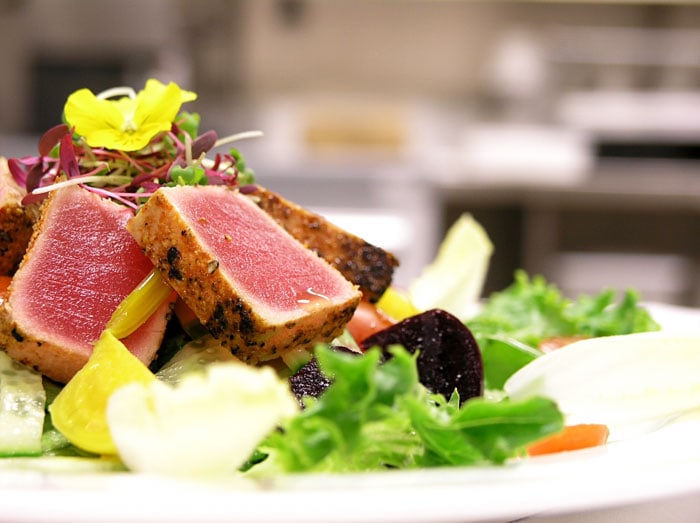
Table of Contents
Commonly found in cans and pouches, albacore is a premium variety and is the only tuna species that can be called ?white? due to its white flesh. Because of the fish?s larger size, it tends to contain more mercury. Enjoy up to 6 oz. (one meal) of albacore tuna per week.
70% of the canned and pouched tuna is actually skipjack (with some small amount of yellowfin). Because the flesh is light in color (but not white), skipjack is also known as ?light? tuna. Skipjack is a relatively small tuna, and therefore has a lower level of mercury. Skipjack tuna is the most sustainable type of tuna.
Yellowfin is also known as ?light? canned or pouched tuna, named for its pale pink flesh. Less commonly canned than skipjack and albacore, yellowfin has a slightly more pronounced flavor than albacore.
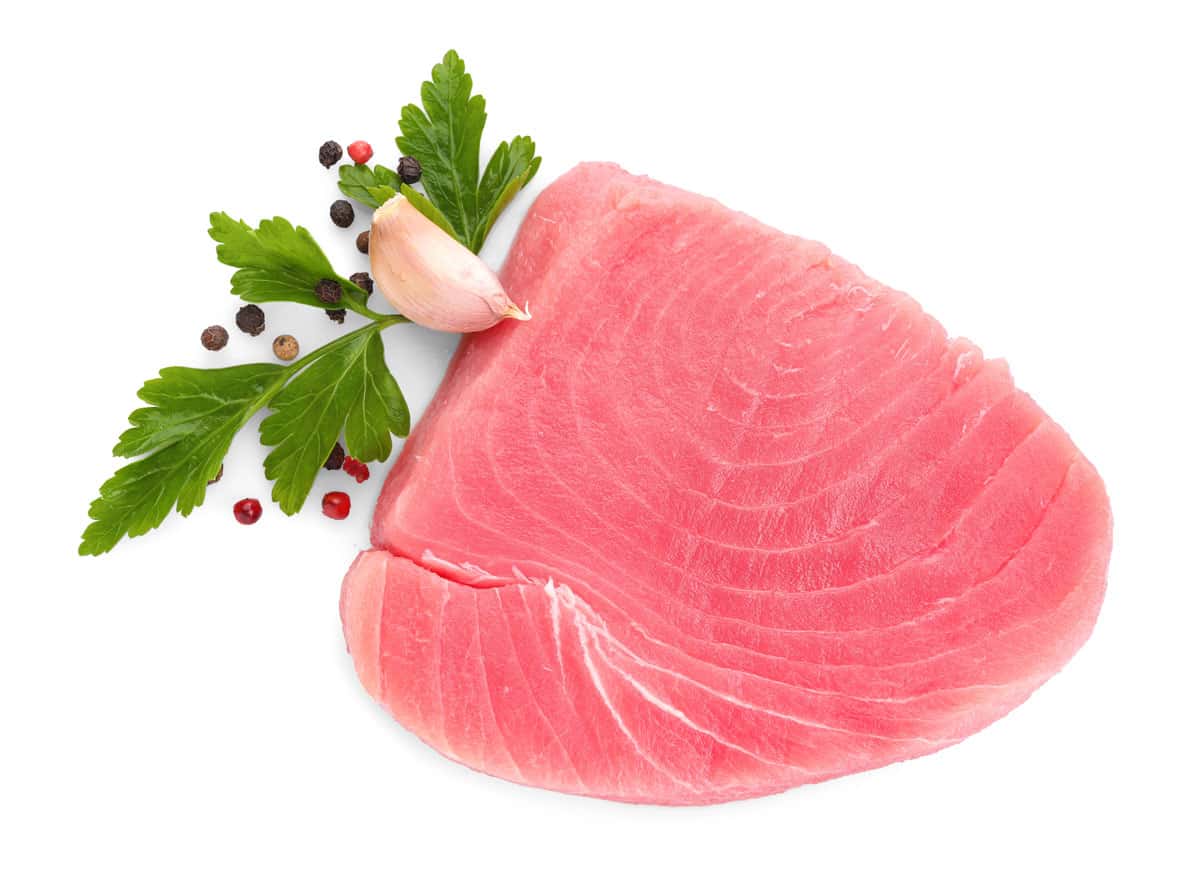
Because tuna steaks generally contain higher levels of mercury than canned light tuna, you may eat up to 6 ounces of tuna steak per week.
Also known as ahi in Hawaii (and as ?ahi tuna? on restaurant menus). Usually eaten as a steak or as sashimi, bigeye tuna is not typically canned.
Bluefin tuna is highly prized for its dark and fatty flesh. It is a delicacy in Japan, where the price of a single giant tuna can exceed $100,000. It is mostly made into sashimi, and not found in cans or pouches. However, because bluefin tuna is slow to reproduce and grossly over-fished, it has become the focus of vigorous conservation efforts by governments and regulatory agencies.
In March 2004, FDA and EPA revised its advisories on mercury in fish for pregnant women and young children. Generally they are advised to eat no more than 2 meals of low-mercury fish per week – one can of light tuna or half a tuna steak is considered one meal. FDA recommends to limit albacore white tuna to one meal per week as it is higher in mercury. So check the labels when purchasing canned tuna.
| Target | Women who may become pregnant, pregnant women, nursing mothers, and young children to avoid some types of fish and eat fish and shellfish that are lower in mercury |
| Avoid Fish with High levels of Mercury | Shark, Swordfish, King Mackerel, or Tilefish |
| 12 oz. (~2 meals) of Low-Mercury Fish per week | shrimp, crab, cod, clams, scallops, canned light tuna, canned salmon, pollock, and catfish etc.Note: Albacore “White” tuna contains more mercury. Limit 6 oz (~1 meal) of albacore tuna per week.
For a complete list of fish and recommended portion, go to National Resources Defense Council |
A well-balanced diet consisting of various fish and shellfish can contribute to better heart health and proper growth and development in children. Not only does fish and shellfish contain high-quality protein, but they also contain many essential nutrients, are low in saturated fat and contain high amounts of omega 3 fatty acids.
Key Message: Tuna and fish is heart friendly. In fact, the American Heart Association definitely recommends fish and fish products for prevention of heart disease. Choose wisely and do not give up fish. Try to eat fish for an average of 2 meals a week. For more detailed information, check out FDA’s Seafood Information website
Tuna is rich in protein, low in saturated fat and calories, and is an excellent source of omega-3 fatty acids. Choose tuna often but pay attention to the following recommendations:
Alumni: University of British Columbia – Owennie is a registered dietitian with a soft spot for chocolate and coffee. She is a believer in balance and moderation, and is committed to keeping healthy eating enjoyable and fun. Owennie received her dietetics training in Vancouver, and is a member of Dietitians of Canada and the College of Dietitians of British Columbia. She has experience in a wide variety of settings, such as clinical nutrition, long-term care and outpatient counseling. Owennie has also worked for a community nutrition hotline and participated regularly as a guest radio host, where she enjoyed sharing her passion and knowledge about food and nutrition with people.
albacore, bigeye, bluefin, food safety, mercury, pregnancy, skipjack, tuna, yellowfin

Like our content? Download our free shopping guide and the first chapter of the GoUndiet Book Now!


HealthCastle Nutrition Inc. · © Copyright 1997-2026 · All rights reserved