
Written By: Sofia Layarda, MPH
Title: Master of Public Health
Alumni: University of California, Berkeley
Last Updated on:

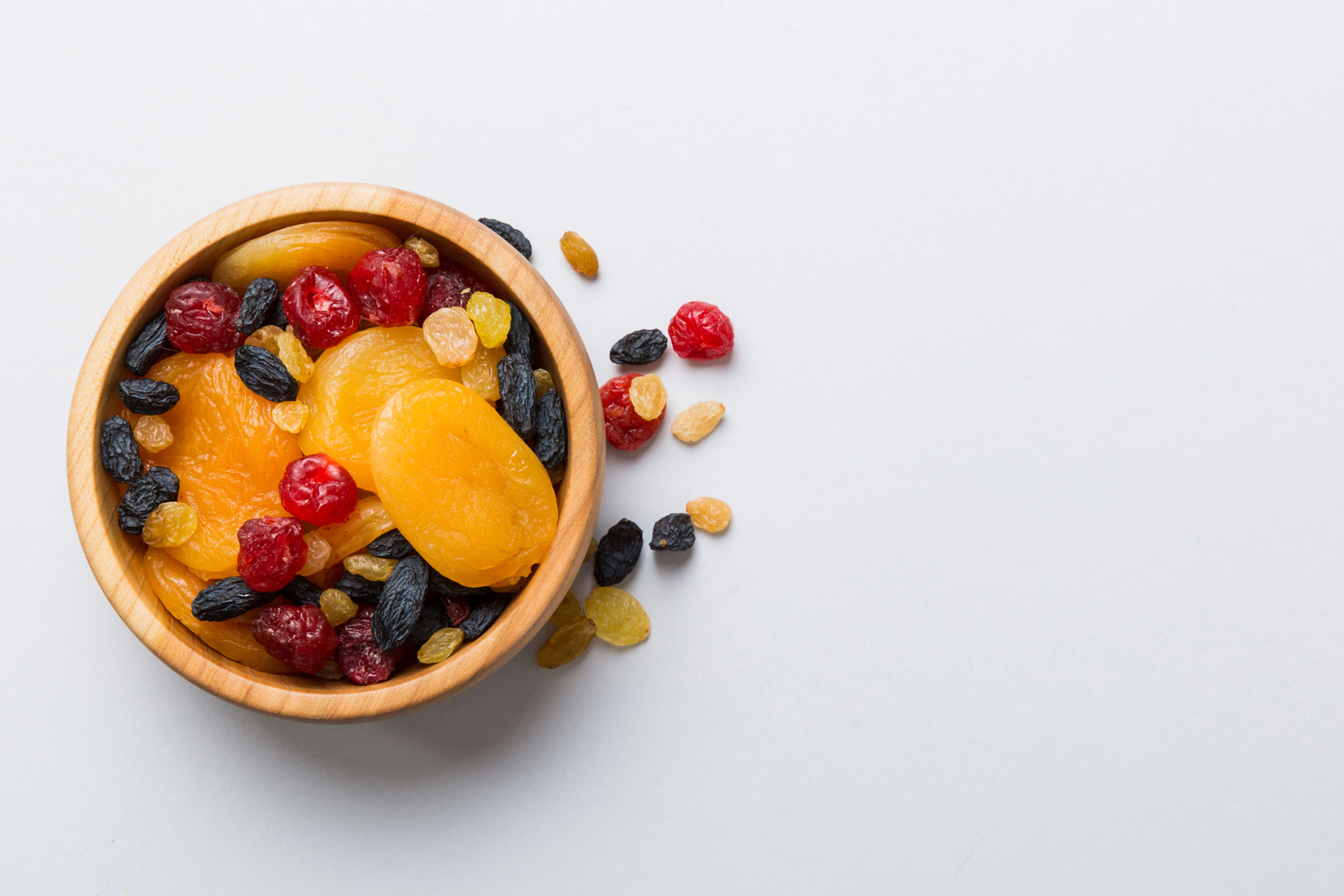
For many of us, the term “dried fruit” is practically synonymous with raisins. But nowadays, so many more dried fruits are available that it seems unfair to ignore them. Most well-stocked grocery stores carry some or all of the following fruits in dried form: apples, apricots, bananas, cherries, cranberries, dates, figs, pears, papayas, persimmons, pineapples, and plums (prunes).

Table of Contents
Compared to their fresh counterparts, dried fruits have a longer shelf life; the removal of water means bacteria cannot thrive and any enzymes (that would otherwise break down the flesh of the fruit) become inactive. The other main difference is the higher caloric and nutrient content per serving of dried fruit compared to fresh. Generally speaking, dried fruits will have more carbohydrate, fiber, and other nutrients per serving. However, there is an exception: dried fruits contain no water-soluble vitamins (such as the B vitamins or Vitamin C) because these vitamins are destroyed when the fruit is dried. If any packaged dried fruits you eat have a high Vitamin C content on the nutrition label, the vitamin has most likely been added back after processing.
The following compares the nutritional values of some fruits fresh and dried (Per 1/2 cup servings):
When buying dried fruits, be aware that sulphur is often added to preserve the color; read the label and choose one that does not include sulphur if you are concerned.
You can add chopped dried fruits to baked goods, stuffings, salads, or pilaf. Eat them straight with breakfast cereals, yogurt, or granola. For a nutritious high-energy snack that travels well, mix them with nuts.
Because dried fruits contain more minerals (like iron and potassium) per serving than fresh fruit, eating them can be a quick and easy way to boost your intake of these nutrients. On the other hand, because of the higher carbohydrate load per serving, people who are watching their total sugar intake should limit how much they consume. Finally, dried fruits are there to complement, not replace, your intake of fresh fruits, so choose fresh when possible and include dried for variation once in a while.
Alumni: University of California, Berkeley – Sofia believes in bringing back fun and pleasure into everyday eating. She loves cooking, and is constantly experimenting with ingredients, creating recipes and trying them out on family and friends. Her latest interest lies in finding realistic and practical ways of environmentally-friendly food/eating habits.
apples, apricots, dried fruits, figs, fruits, grapes, plums, prunes, raisins

Like our content? Download our free shopping guide and the first chapter of the GoUndiet Book Now!


HealthCastle Nutrition Inc. · © Copyright 1997-2026 · All rights reserved