
Written By: Owennie Lee, RD
Title: Registered Dietitian
Alumni: University of British Columbia
Last Updated on:

Breads are definitely a dietary staple for people all across the world, but they can take very different forms and carry varying cultural meanings. Join us on a journey to learn more about these international breads, and add some international flare to your bread repertoire!
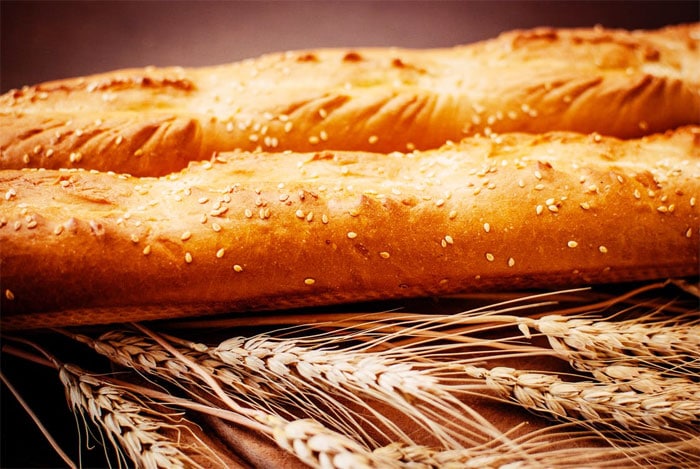
Table of Contents
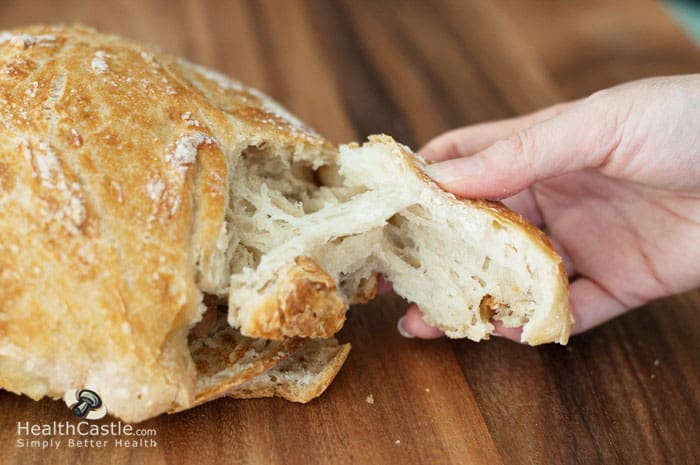
Naan is one of the kinds of flat breads that people from India, Pakistan, Afghanistan, and Iran treat as dietary staples. Like pita bread, naan is leavened and is usually baked in the oven. Naan is typically served hot and is usually brushed with ghee (a type of clarified butter from South Asia) or butter. Naan is commonly torn into smaller pieces in order to scoop up savory dishes (e.g., curried lentils) instead of relying on cutlery.
One slice of naan (1.1 oz) has 79 calories, 12 grams of carbohydrates, and 0 grams of fiber.
Ciabatta is a classic Italian bread that is most commonly seen in the form of a Panini, a grilled Italian sandwich. In Italian, ciabatta actually means “slipper,” which references the short and wide shape of the bread. Although the basic ingredients are deceptively simple – flour, water and yeast – ciabatta is not the easiest bread to make for beginners.
One piece of ciabatta (2 oz.) has 131 calories, 27 grams of carbohydrates, and 0.6 grams of fiber.
Challah is a special braided bread that is customarily associated with Jewish traditions, but is also a traditional bread in many European countries and among non-Jewish populations. Jews eat Challah on the Sabbath and holidays, except Passover, when eating leavened bread is not allowed. Challah is a rather dense bread that is made with a large number of eggs, white flour, water, and sugar. The dough is then cut into three long pieces and braided together before baking.
One piece of challah (2.8 oz.) has 220 calories, 41 grams of carbohydrates, and 1 gram of fiber.
Baguette is a well known French bread that is characterized by its long shape and its crispy crust. Made with flour, water, and yeast, the baguette is typically eaten as a sandwich bread or served with cheese and pâté.
A 2-ounce slice of baguette has 150 calories, 30 grams of carbohydrates, and 1 gram of fiber.
Yet another type of French bread, brioche is very different from the baguette in that is it highly enriched. Brioche typically has a golden and flaky crust from an egg wash applied before baking, and its crumb is rich and tender – thanks to its high egg and butter contents. Brioche resembles more of a pastry than bread, and is often eaten at breakfast, as a snack, or as a dessert if it is made with fruit, chocolate and other varieties of fillings.
One piece of brioche (2 oz.) has 140 calories, 15 grams of carbohydrates, and 0 grams of fiber.
As interesting as these breads are, they are mostly made from white flour traditionally. These days, whole grain varieties have become available to appeal to the health-conscious masses. Next time you are bored with your “usual suspects” on the bread aisle, be sure to venture out and try some of these different breads from around the world.
Alumni: University of British Columbia – Owennie is a registered dietitian with a soft spot for chocolate and coffee. She is a believer in balance and moderation, and is committed to keeping healthy eating enjoyable and fun. Owennie received her dietetics training in Vancouver, and is a member of Dietitians of Canada and the College of Dietitians of British Columbia. She has experience in a wide variety of settings, such as clinical nutrition, long-term care and outpatient counseling. Owennie has also worked for a community nutrition hotline and participated regularly as a guest radio host, where she enjoyed sharing her passion and knowledge about food and nutrition with people.
baguette, bread, brioche, challah, ciabatta, naan
The 2010 Dietary Guidelines: A How-to Guide to Make them Work for You

Like our content? Download our free shopping guide and the first chapter of the GoUndiet Book Now!


HealthCastle Nutrition Inc. · © Copyright 1997-2026 · All rights reserved