
Written By: Gloria Tsang, RD
Title: Founding Dietitian
Alumni: University of British Columbia
Last Updated on:

As the initial burst of New Year’s motivation fades, many people find themselves struggling with weight management and the constant battle to ‘eat less.’ But what if the key to lasting weight and metabolic health isn’t about portion control and willpower, but about the quality of your food? Latest nutritional research proposes a counter-intuitive view: increasing the quantity of food you eat does not mean consuming more calories. The true secret to sustained weight management and metabolism lies in the degree of food processing.
Table of Contents
A British study1 published at the end of December re-analyzed data from a randomized feeding trial originally published by NIH researchers in 2019. The data involved 20 adults who participated in two weeks of “ultra-processed diet” and two weeks of “unprocessed diet,” crossing over afterward. Participants could eat freely in both phases, with no calorie or portion limits.
Researchers observed the impact of food processing levels on eating behavior. The results showed:
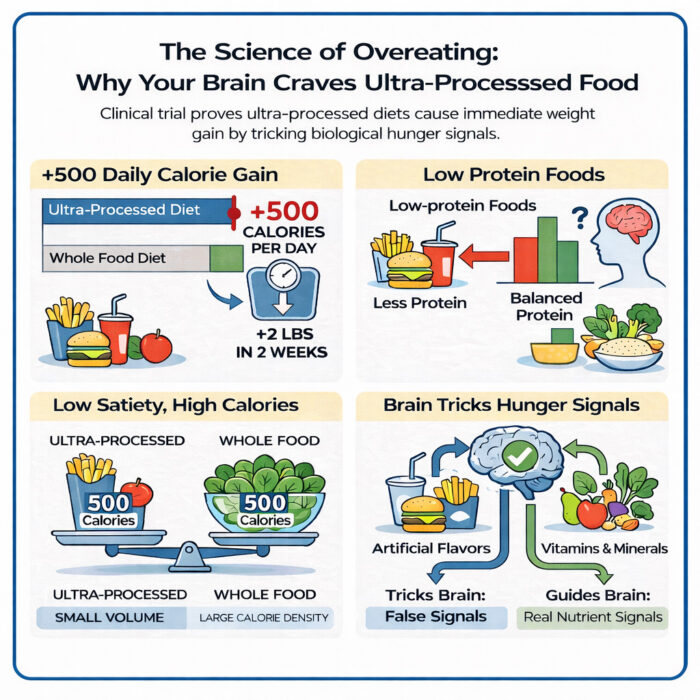
The re-analysis also showed that participants in the unprocessed diet phase naturally chose foods with lower energy density, fewer fats and refined carbohydrates, and significantly increased vegetable and fruit intake. The research team called this phenomenon “Nutritional Wisdom,” referring to our ability to better balance micronutrient needs and energy intake when faced with whole foods.
This aligns with the original 2019 study2, which found that participants consuming the ultra-processed diet consumed about 500 extra calories per day on average and experienced weight gain, while EatClean dieters lost weight without deliberate dieting.
The data consistently shows that fat loss is not just a matter of quantity, but a matter of food structure and/or processing.
HealthCastle has strict sourcing guidelines. We reference peer-reviewed studies, scientific journals and associations. We only use quality, credible sources to ensure content accuracy and integrity.
Alumni: University of British Columbia – Gloria Tsang is the author of 6 books and the founder of HealthCastle.com, the largest online nutrition network run by dietitians. Her work has appeared in major national publications, and she is a regularly featured nutrition expert for media outlets across the country. The Huffington Post named her one of its Top 20 Nutrition Experts on Twitter. Gloria’s articles have appeared on various media such as Reuters, NBC & ABC affiliates, The Chicago Sun-Times, Reader’s Digest Canada, iVillage and USA Today.
processed food, whole food diet
Opinion: The New USDA Inverted Pyramid Elevates Protein, but Leaves Plant Eaters Behind
Like our content? Download our free shopping guide and the first chapter of the GoUndiet Book Now!


HealthCastle Nutrition Inc. · © Copyright 1997-2026 · All rights reserved