
Written By: Keeley Drotz, RD
Title: Registered Dietitian
Alumni: Seattle Pacific University
Last Updated on:

Commercial baby foods used to be a convenience; today, they are a staple. It is very common to serve manufactured baby food rather than make our own. Is this the best choice? Is it healthy for our babies?
Table of Contents
The concept of mass-producing food for babies is not natural, even if the ingredients are “natural.” Commercial baby foods are very processed and lack the freshness of foods made at home; for example, manufactured baby foods don’t expire for more than a year (stored in the pantry), whereas homemade baby foods last about three months in the freezer.
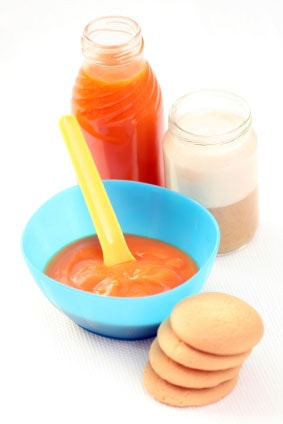
Although the organic ingredients may be better for your baby, organic commercial baby food is still mass-produced. Organic or not, your baby is being fed highly processed food straight out of a jar.
It’s not difficult – or extremely time-consuming – to make baby food at home, especially in batches. It is also far more cost-effective to make baby food at home than to buy commercial varieties. You can learn easy ways to prepare both cooked and uncooked.
Just as adults shouldn’t eat all of our meals straight out of a can or box, it’s not healthy for babies and toddlers to regularly consume processed, packaged baby foods. It is acceptable to use manufactured baby food occasionally, just like it’s okay to eat fast food or a frozen dinner once in awhile. When on-the-go or traveling, the safest, healthiest option may be a jar of baby food. But this should be the exception, not the norm.
Alumni: Seattle Pacific University – Keeley graduated Summa Cum Laude from Seattle Pacific University with a Bachelor of Science in Food and Nutrition and a Dietetics Specialization. She went on to complete her dietetic internship at Baylor University Medical Center in Dallas, where she received the Distinguished Dietetic Intern Award and Scholarship.
baby food, food additives, organic
Blueberries: Nutrition Facts and How-To
Dining Out With Diabetes: Italian Restaurants (With Checklist)
Like our content? Download our free shopping guide and the first chapter of the GoUndiet Book Now!

HealthCastle Nutrition Inc. · © Copyright 1997-2026 · All rights reserved