
Written By: Sejal Dave, RD
Title: Registered Dietitian
Alumni: University of Florida
Last Updated on:

Reading a food label may feel like you are reading a mystery novel. Don’t worry though; this is a mystery you can solve! Food labels provide a wealth of information that can make it easier for you to pick healthy foods that fit into your meal plan. When you have diabetes, it’s especially important to use the information on the food label to help you stay healthy.
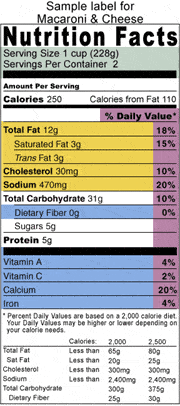
Table of Contents
The nutrition facts label tells you more than the ingredients in a food. You can find out exactly how much salt you get when you eat a bag of popcorn, or you might be wondering how many carbs are in your favorite cereal. There may be foods that you have avoided simply because you weren’t sure if they would fit in your meal plan. Being familiar with the information on food labels allows you to try different foods.
At the bottom of the label is more info on the percent daily values based on both a 2000 and 2500 calorie meal plans.
The nutrients at the top of the food label, total fat, cholesterol, & sodium should be limited to reduce your chances of developing heart disease. Look at the total carbohydrate value to determine if the carbohydrate content of the food will fit into your meal plan. If you are limited to 60 carbs per meal, it’s not a good idea to buy bagels that are 70 grams per serving. Use the % daily values as a tool for healthy meal planning, but remember that your requirements may be higher or lower based on your calorie needs.
When it comes to food labels & diabetes management you have what it takes to solve the mystery.
Alumni: University of Florida – Sejal is a registered dietitian, a certified diabetes educator and she holds a masters degree in nutrition and health. Sejal was the project coordinator for the Veteran’s Administrations (VA) national weight loss program and previously worked for the VA hospital in Tampa, FL as a Spinal Cord Injury dietitian.
Sejal has had numerous clinical and community education experiences, including pediatric and intensive care nutrition support. She has also had the opportunity to teach nutrition courses at the community college level to students interested in pursuing health professions. One of her favorite areas of education is diabetes management.
blood sugar, diabetes, diabetes diet, nutritional labels, sugar

Like our content? Download our free shopping guide and the first chapter of the GoUndiet Book Now!


HealthCastle Nutrition Inc. · © Copyright 1997-2026 · All rights reserved