
Written By: Gloria Tsang, RD
Title: Founding Dietitian
Alumni: University of British Columbia
Last Updated on:

Milk has a solid reputation as an important source of calcium and Vitamin D. But there’s lots that most people don’t know about this common beverage. In her book Milk: The Surprising Story of Milk Through the Ages, Anne Mendelson shares some interesting trivia about milk and other dairy products.
Table of Contents
Historically, fresh (as in unsoured, uncultured) milk as we know it today was not the dominant form of milk consumed. In the early days before refrigeration was common, milk was often consumed as “sour milk” instead.
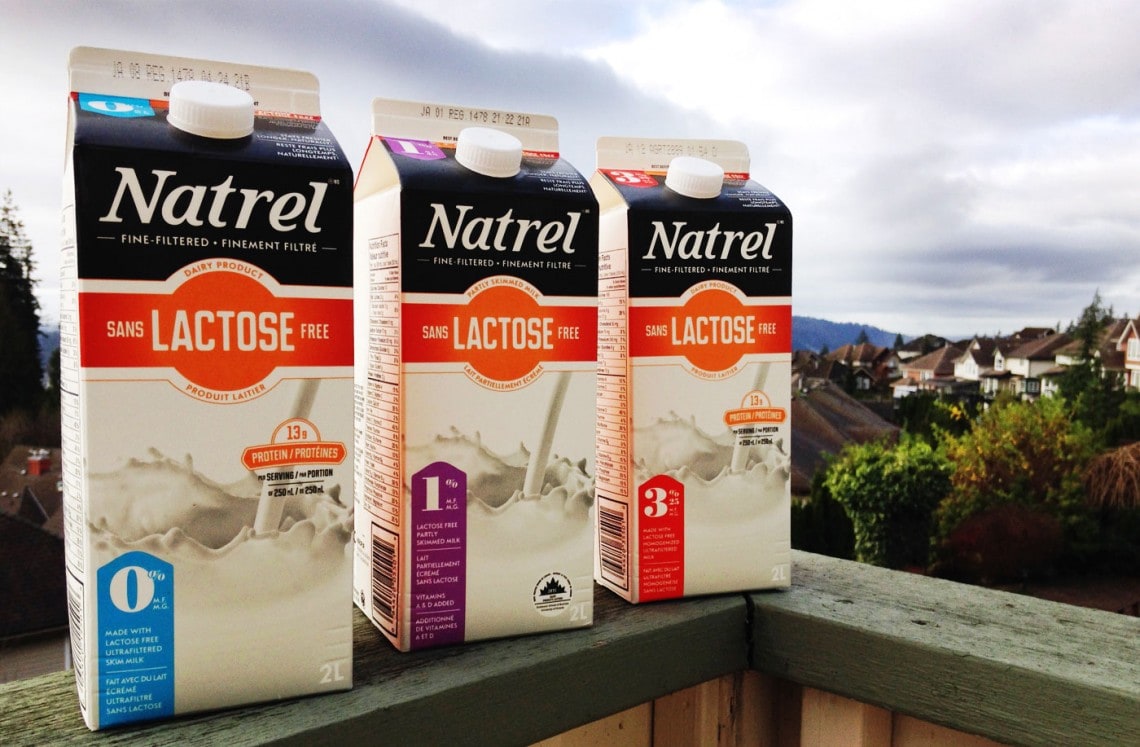
In many parts of the world, lactose intolerance is more common than lactose tolerance. Since fresh milk contains the highest amount of lactose, this translates to ethnic cuisines around the world that make extensive use of milk in an form other than fresh – whether cultured or soured (yogurt), cooked with other spices and seasonings, or acidulated (acid is added) into soft curds. Some lactose-intolerant individuals can also tolerate milk from animals other than cows – for example, goat or sheep’s milk.
Before homogenization became the common standard, customers judged milk by the thickness of its “creamline” – where the cream (fat globules) rose and collected at the top part of a glass bottle. Homogenization refers to the process by which the milk is pushed by high speed through a tiny opening so that the fat particles are reduced in size and dispersed evenly throughout the milk instead of rising to the top. Nowadays, to standardize the milkfat content, homogenization actually involves removing all the fat from milk and then adding it back in to the specified level (3.25% milkfat for whole milk). Since cows produce milk with varying fat content (Mendelson cites a study that found cow’s milk fat content was anywhere from 2% to 8%), homogenization is the industry’s way of ensuring uniform milk fat content. Proponents of unhomogenized milk say the homogenization process alters the taste of milk.
FDA cautions against consuming raw milk because of the risk of foodborne illnesses. Currently, federal law prohibits the sale of raw milk across state lines, but each state regulates sales within the state so it may be sold in some parts of the country. Pasteurization involves exposing raw milk to heat to kill any disease-causing organisms. The length of time and temperature for pasteurization varies, but the most common large-scale pasteurization exposes the milk to at least 161F for 15 seconds, and then immediately cools the milk back down. Another lower-temperature form of pasteurization (vat pasteurization) is possible, which may have less effect on taste, but it requires 30 minutes to complete.
According to Mendelson, the majority of organic milk in the US comes from three or four very large companies, and big farm operations dominate. These farms tend to depend on similar feeding and breeding techniques as the conventional industry, and the milk they produce is homogenized and pasteurized the same way. The organic regulation only requires cattle “access to pasture” and the outdoors in general, without specifying how much or how little is required for the resulting milk to be labeled organic.
A mother of an 18-month old toddler wrote to us after reading our recent yogurt comparison article. She is aware that her toddler needs whole milk dairy products. However when she went out to shop for yogurt, she found numerous products labeled “low fat” or “fat-free” but could not find any that labeled “whole milk”.
Milk: % MF / Fat (g) per cup
You will often find % MF information on the label of dairy products. Percent Milk Fat (% MF) indicates the percentage of fat in grams (weight), not calories. If you are unable to find out which type of milk is used in making a yogurt product, check the % MF. As shown in the above chart, a yogurt product containing at least 3.25% MF indicates that it is made from whole milk.
Dairy for Toddlers: Other than whole cow’s milk, goat’s milk is an excellent alternative. Goat’s milk contains more fat (10 g per serving), more calcium, less lactose and has an easier-to-digest protein profile. Regardless of goat or cow’s milk, always choose pasteurized products.
If you are curious about trying milk that is different from the mass-produced type, the safest bet would be to find a local producer that sells unhomogenized, vat-pasteurized milk.
Alumni: University of British Columbia – Gloria Tsang is the author of 6 books and the founder of HealthCastle.com, the largest online nutrition network run by dietitians. Her work has appeared in major national publications, and she is a regularly featured nutrition expert for media outlets across the country. The Huffington Post named her one of its Top 20 Nutrition Experts on Twitter. Gloria’s articles have appeared on various media such as Reuters, NBC & ABC affiliates, The Chicago Sun-Times, Reader’s Digest Canada, iVillage and USA Today.

Like our content? Download our free shopping guide and the first chapter of the GoUndiet Book Now!


HealthCastle Nutrition Inc. · © Copyright 1997-2026 · All rights reserved