
Written By: Gloria Tsang, RD
Title: Founding Dietitian
Alumni: University of British Columbia
Last Updated on:

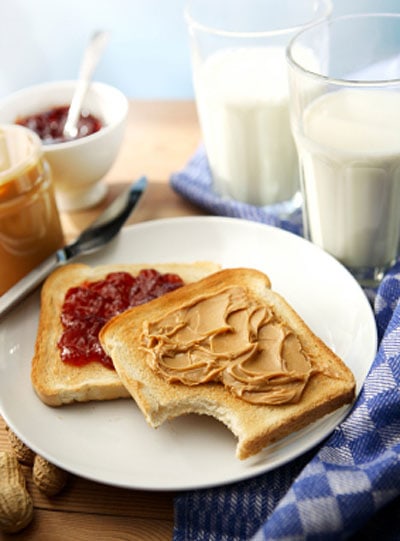
Not many people think of plain toast as a very fulfilling breakfast, so most of us dress up our toast with some kind of spread. Which spread you use – and how much – can have a dramatic impact on how many calories and how much nutrition you get out of your breakfast.
Table of Contents
Boasting that it contains 50 hazelnuts per jar, Nutella is marketed as a healthy breakfast choice for children. But what the commercials don’t tell you is that Nutella has more sugar and palm oil than hazelnuts. Indeed, 40% of the calories come from sugar alone. It’s ok to enjoy this hazelnut-based chocolate spread once in a while, just don’t bank on it as a health food.
In each tablespoon: 100 calories and 5.5 g fat
When margarine was first introduced to the marketplace, it was loaded with trans fat, which increase LDL (“bad” cholesterol) and lower HDL (“good” cholesterol). In recent years, food manufacturers have created non-hydrogenated margarine, which contains no trans fat, and is softer than the first-generation margarine stick. When you shop, look for non-hydrogenated vegetable oil on the ingredient list to make sure you’re getting no trans fats. For a better nutritional impact, try a spread (like Benecol) that contains plant sterols, which have been proven to lower cholesterol.
In each tablespoon: (soft tub) 60 calories and 6 g fat
You may think of cream cheese as a good bagel companion which adds to your daily dairy servings. But did you know that cream cheese actually contains much more fat than calcium? In fact, cream cheese provides hardly any calcium per serving – most dark green vegetables pack more of a calcium punch than cream cheese. (Although you probably don’t want to put them on your toast for breakfast!)
In each tablespoon: (regular) 50 calories and 5 g fat; (light) 30 calories and 2.5g fat
Not many spreads can boast peanut butter’s versatility. It provides a dose of carbohydrates for an energy boost, bundled with the full-feeling provided by protein and monounsaturated fat – a heart-healthy fat that lowers total cholesterol and LDL (“bad” cholesterol), while boosting HDL (“good” cholesterol). Peanut butter also contains Vitamin E, fiber, niacin, phosphorus, and magnesium. When you shop, look for natural peanut butter made without trans-fat laden hydrogenated oil.
In each tablespoon: 95 calories and 8 g fat
Jam can be a refreshing way to start your morning, but don’t fool yourself that you’re getting a serving of fruit. Most of the calories in many varieties of jam come from sugar. Even “sugar-free” jams are often sweetened with artificial sweeteners. When you shop, look for jam made with its own natural juice that has no sugar – and no artificial sweeteners – added.
In each tablespoon: 50 calories and 0 g fat
Spread is considered an “extra” on the food guide, so keep in mind that you don’t really need them for nutrition. The most important thing is to watch the portion size. One tablespoon is the standard, and you can visually estimate it by imagining a serving about the size of the tip of a woman’s thumb. One tablespoon of any of these spreads is an okay way to start your day, but piling on extra spoonfuls can pack on extra calories fast.
Alumni: University of British Columbia – Gloria Tsang is the author of 6 books and the founder of HealthCastle.com, the largest online nutrition network run by dietitians. Her work has appeared in major national publications, and she is a regularly featured nutrition expert for media outlets across the country. The Huffington Post named her one of its Top 20 Nutrition Experts on Twitter. Gloria’s articles have appeared on various media such as Reuters, NBC & ABC affiliates, The Chicago Sun-Times, Reader’s Digest Canada, iVillage and USA Today.
breakfast, cholesterol, cream cheese, jam, morning, nutella, peanut butter, plant sterol, toast
Like our content? Download our free shopping guide and the first chapter of the GoUndiet Book Now!

HealthCastle Nutrition Inc. · © Copyright 1997-2026 · All rights reserved