
Written By: Gloria Tsang, RD
Title: Founding Dietitian
Alumni: University of British Columbia
Last Updated on:

Table of Contents
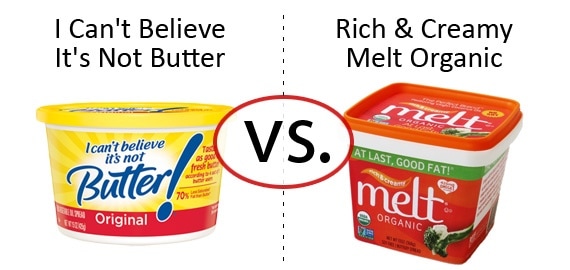
Since the mandatory labeling of trans fat took place on January 1, 2006, we received many emails from readers asking for margarine brand suggestion. It occurred to me that perhaps consumers associate trans fat with margarine and neglect other sources. In our previous article on trans fat, we often mentioned packaged food as one of the major sources of trans fat. However we did not list any food examples so today I set sail to my local grocery store for a trans-fat hunt and here is what I found.

Upon arriving at the store, I proceeded directly to the margarine aisle. Not to my surprise, many brands of soft non-hydrogenated margarine now contain zero trans fat. It was happy news and I continued to the rest of the store. Little did I know that I would be stunned for the rest of my hunt. The FDA Nutrition Committee recommends less than 2 g of trans fat daily in a 2000 kcal diet. So bearing this in mind, I reminded myself not to over-react when I found products with trans fat. However, the biggest shocker was finding trans fat in some supposedly “healthier foods”.
Frozen convenient food is another big source of trans fat. Frozen pastry, cake, tart, rising pizza are just a few examples.
Unlike partially hydrogenated oil, fully hydrogenated oil does not contain trans fat. Instead, it contains more saturated fat (primarily stearic acid). Stearic acid is immediately converted into oleic acid (a type of mono-unsaturated fatty acids) in our body and that’s why stearic acid does not raise LDL cholesterol (the bad cholesterol).
Trans fats are found in numerous foods – commercially packaged foods, commercially fried food such as French Fries from some fast food chains, other packaged snacks such as microwaved popcorn as well as in vegetable shortening and some margarine. Indeed, any packaged goods that contains “partially-hydrogenated vegetable oils” or “shortening” most likely contain trans fats.
Before the invention of trans fats, we cooked food with lard, palm oil or butter etc which are high in saturated fats. Researchers found that saturated fats increase LDL cholesterol (the Bad cholesterol) which may increase the risk of heart disease.
Therefore, manufacturers started to use the healthier vegetable oils in their food production. As liquid vegetable oils are not stable to heat and can go rancid easily, scientists began to “hydrogenate” liquid oils so that they can withstand better in food production process and provide a better shelf life. As a result of hydrogenation, trans fats are formed.
Similar to saturated fats, trans fats also increase LDL cholesterol (the Bad cholesterol) and lower HDL cholesterol (the Good cholesterol) therefore increasing the risk of heart disease. Some studies also showed that a diet high in trans fats may be linked to a greater risk of Type 2 Diabetes.
For the sake of your heart, minimize the intake of both saturated fats and trans fats. Choose wholesome fresh foods instead of packaged foods. The more convenient the product, the more likely it is to contain trans fat. The good news is – there are always trans-fat free alternatives out there. Therefore spend time investigating and comparing products by checking the Nutrition Facts label.
Please note that trans fat is also found in many fried foods such as chicken nuggets and french fries as the fast food chains often use vegetable oil containing trans fat to deep fry. Also don’t forget about doughnuts for all of you doughnut fans out there. A single glazed doughnut from your favorite doughnut store can contain 4 g of trans fat and 3 g of saturated fat – that’s shocking! Despite some stores having changed their frying oil, it is still advised to eat less fat anyway – less total fat in general means less trans and saturated fats!!!
Minimize the intake of both saturated fats and trans fats by checking the food labels. Effective January 1, 2006, all packaged food products must list trans fat content on the Nutrition Facts panel. The amount of trans fats per serving of food will appear under the Total Fat section of the label.
For those labels not listed the amount of trans fats in countries where trans-fat labeling law does not exist, here is how you can figure it out on your own: add up the values for saturated, polyunsaturated and monounsaturated fats. If the number is less than the “Total fats” shown on the label, the unaccounted is trans fat.
Please also note that trans fats are also found in many fried foods such as chicken nuggets and french fries from the fast food chains as they often use vegetable oil containing trans fats. Despite some chains have started changing their frying oil, it is advised to eat less fat anyway – less total fat in general means less trans and saturated fats!!!
Update: In April 2004, the FDA Food Advisory Committee voted in favor of recommending that trans fat intake level be reduced to “less than 1% of energy (2g per day of a 2000 kcal diet)”.
Corporate food manufacturers such as Kraft and Kellogg have announced their plans to replace certain vegetable oils in their production to reduce or eliminate trans fat content.
In Canada, Health Canada and the Heart and Stroke Foundation of Canada are currently co-chairing a task force aimed at finding ways to effectively reduce industrial trans fats in the food supply to the lowest levels possible.
Not all trans fats are bad! The naturally-occurring trans fat conjugated linoleic acid (CLA) may offer health benefits. Naturally found in beef, lamb and dairy products (full fat), conjugated linoleic acid has been studied for its potential role in weight loss and osteoporosis prevention.
There are very few clinical trials of conjugated linoleic acid in overweight people. These studies showed that conjugated linoleic acid supplements did result in fat loss but not body weight loss. A Swedish study published in 2001 showed that conjugated linoleic acid helped burn fat by decreasing abdominal fat in overweight men. Another Dutch study published in July 2003 showed that conjugated linoleic acid supplements help maintain lean muscle tissue after weight loss.
Researchers from the University of Connecticut found that postmenopausal women with a higher dietary intake of conjugated linoleic acid had higher bone mineral density in the forearm, hip, lumbar spine and the whole body. Results of this study were published in the Journal of the American College of Nutrition in June 2005.
Research on conjugated linoleic acid in humans is still very limited. What we know is that the effect of fat loss is more convincing in animal studies than in human studies. Some human trials did found that conjugated linoleic acid can reduce body fat. Safety and toxicity levels have not yet established. In addition, side effects have not been well-documented. Therefore, avoid the supplements but regard the naturally-occurring trans fat conjugated linoleic acid as one more good reason to drink milk.
Alumni: University of British Columbia – Gloria Tsang is the author of 6 books and the founder of HealthCastle.com, the largest online nutrition network run by dietitians. Her work has appeared in major national publications, and she is a regularly featured nutrition expert for media outlets across the country. The Huffington Post named her one of its Top 20 Nutrition Experts on Twitter. Gloria’s articles have appeared on various media such as Reuters, NBC & ABC affiliates, The Chicago Sun-Times, Reader’s Digest Canada, iVillage and USA Today.
cholesterol, hydrogenated oil, partially hydrogenated oil, trans fat
Magnesium in Plant-based Foods May reduce Colon Cancer, Heart Disease and Diabetes Risks
Like our content? Download our free shopping guide and the first chapter of the GoUndiet Book Now!


HealthCastle Nutrition Inc. · © Copyright 1997-2026 · All rights reserved